🇪🇺 PDF for VAT Registration in Europe — 2026 Guide
Starting a business in Europe? This guide explains when you must register for VAT, the thresholds in six countries, and which documents to prepare as PDFs — plus a free checklist you can build in your browser. No signup, nothing uploaded.
🔒 Your data never leaves this page
- This tool is built 100% in your browser — nothing is uploaded to any server.
- No account, no email capture, no tracking of the names or figures you type.
- Your document is assembled on your own device. Why that matters →
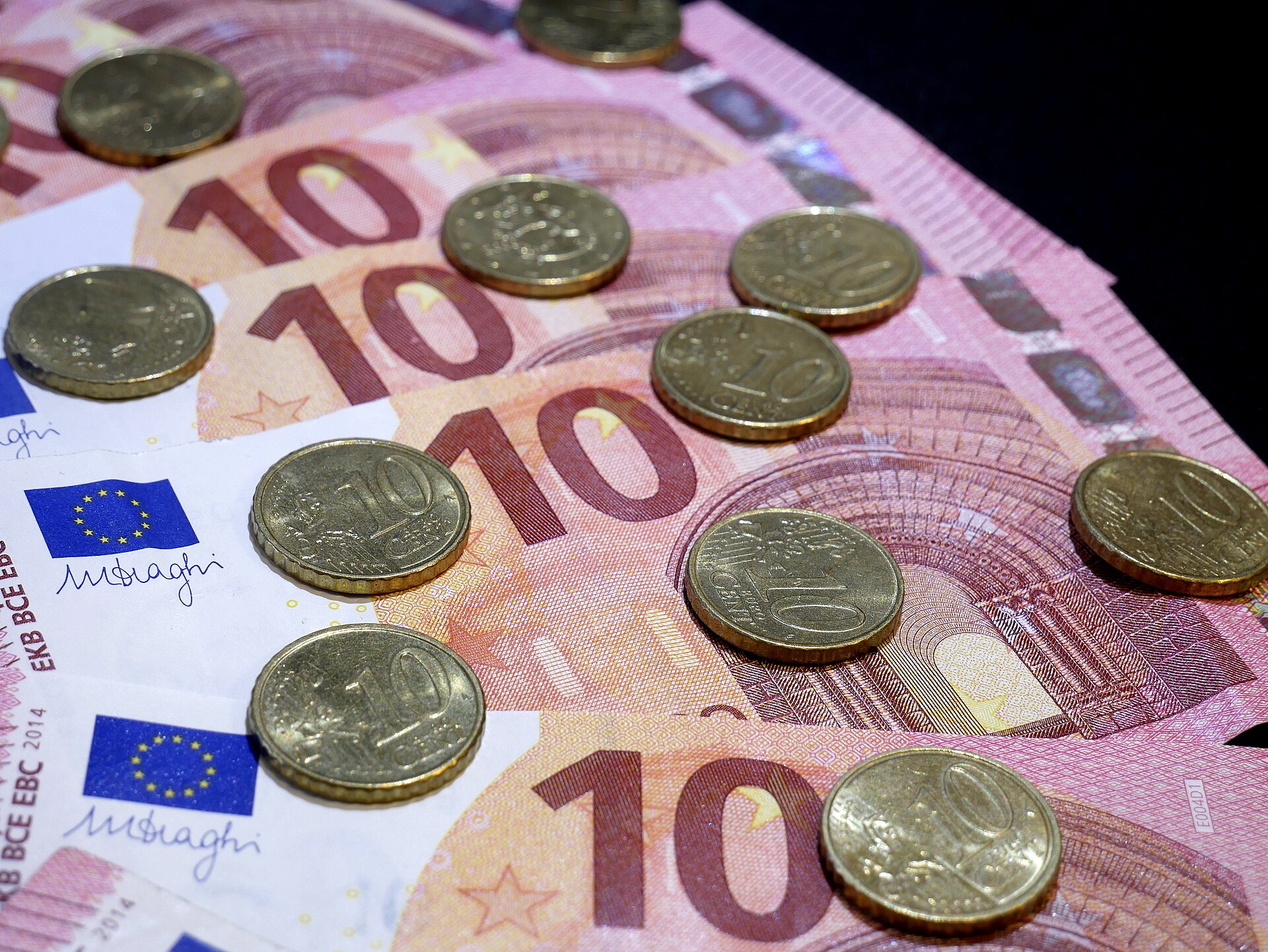
Answer in brief: since 1 January 2025, the EU's small-business (SME) VAT scheme works across borders: a business established in one EU country can use the VAT exemption in other EU countries too, as long as its total annual turnover across the whole EU stays under €100,000 and its turnover in each country stays under that country's national threshold (capped at €85,000). Before 2025 the exemption only worked in the business's home country. (Source: Council Directive (EU) 2020/285; European Commission SME VAT portal.)
What VAT registration actually means
Registering for VAT means your business joins the VAT system: you charge VAT on your sales, you reclaim VAT on your purchases, and you file regular VAT returns with your tax authority. Your tax authority gives you a VAT number, which goes on every invoice you issue. Customers who are VAT-registered businesses can then reclaim the VAT you charged them — which is why B2B customers almost always ask for your number before they pay.
Below the threshold, most countries let small businesses stay outside the system: no VAT on your invoices, no VAT returns, but also no reclaiming VAT on your purchases. That trade-off is the real decision. A freelancer selling only to private consumers usually stays exempt as long as possible; a freelancer selling to VAT-registered companies often registers voluntarily, because those clients prefer a supplier who charges VAT they can reclaim.
Your PDF checklist — prepare these documents
Tax authorities ask for the same things almost everywhere, and they almost always want them as PDFs. Prepare: (1) proof of identity — passport or national ID; (2) proof of business address — a utility bill or rental contract; (3) your business registration or trade licence, if your country issues one; (4) a short description of your business activity. Scan paper documents with your phone, then use our Free merge PDF tool to combine multi-page documents into one file, Free compress PDF if a portal caps the file size, and Free JPG to PDF for phone photos of documents. Every step runs in your browser — your ID and address never touch a server.
VAT registration thresholds by country
Thresholds are annual turnover figures. Cross the threshold and registration becomes compulsory — usually from the moment you cross it, not from the next year. Figures change, so confirm them with your national tax authority before acting.
| Country | Registration threshold (annual turnover) | Notes |
|---|---|---|
| Germany | €25,000 (previous year) / €100,000 (current year) | Kleinunternehmer scheme, §19 UStG, since 1 January 2025. Exceed €100,000 during the year and the exemption ends immediately. |
| United Kingdom | £90,000 | HMRC threshold since 1 April 2024. The UK is outside the EU, so the EU SME scheme does not apply. |
| France | €77,700 (services) / €188,700 (goods) | Micro-entreprise VAT franchise (franchise en base de TVA). Separate thresholds for services and sales of goods. |
| Netherlands | €20,000 | Small businesses scheme (KOR — kleineondernemersregeling). You opt in; it exempts you from charging VAT. |
| Ireland | €40,000 (services) / €80,000 (goods) | Revenue thresholds since 2025. Separate limits for services and goods, as in France. |
| Spain | No general threshold | Spain has no small-business exemption threshold — in principle you register from your first taxable sale. Check with the Agencia Tributaria. |
On top of the national thresholds, the EU-wide SME scheme caps total EU turnover at €100,000 for cross-border exemption (Directive (EU) 2020/285, in force since 1 January 2025). If you sell across borders, both limits matter: the national one in each country, and the €100,000 EU-wide one.
Register for VAT in 4 steps
- Check your country's threshold in the table above — and your total EU turnover against the €100,000 SME limit.
- Gather the documents your tax authority asks for and prepare each one as a PDF.
- Apply through your national tax authority's online portal (or the SME scheme portal for cross-border exemption).
- Once registered, put your VAT number on every invoice and check new customers in VIES.
After registration: invoices, VIES and OSS
Registration is the start, not the end. Every invoice you issue must carry the details in Article 226 of the VAT Directive — date, sequential number, both VAT numbers, the VAT rate and the VAT amount. Our VAT-compliant invoice guide lists all 13 required details, and our Free VAT invoice creator builds the PDF for you in the browser.
Two free EU tools are worth bookmarking. VIES (VAT Information Exchange System) lets you check whether a customer's VAT number is valid before you trade with them — a two-minute check that prevents real problems. And the One-Stop Shop (OSS) lets you report VAT on cross-border B2C sales in a single quarterly return to your home tax authority, instead of registering in every country you sell to. Both are run by the European Commission and free to use.
Your documents vs server-upload tools: the privacy contrast
VAT registration means uploading your passport, your address proof and your business papers — the most sensitive documents you own. Most online PDF tools upload those files to their servers to merge or compress them, and their privacy policies decide what happens next. The tools on this site work differently: merging, compressing and converting happen entirely in your browser, so your ID and address never leave your device. That is the whole point of this site — and for registration documents, it is the only sane way to prepare a PDF. Read more in our guide are online PDF tools safe?
📸 The PDFBuddyFree verdict
- Check two numbers, not one — your national threshold and the €100,000 EU-wide SME limit.
- Prepare every document as a clean PDF before you open the portal — it halves the application time.
- Your ID and address never leave your device when you prepare them here.
Straight talk: limits
⚖️ General information, not tax advice
This guide explains the EU rules in plain language. It is not tax advice, and it cannot cover your specific situation — your country, your activity, your customers. Thresholds change (Germany's changed on 1 January 2025, the UK's on 1 April 2024). Confirm the current figures with your national tax authority or your accountant before registering.
🌍 One guide, 27 different systems
VAT is harmonised at EU level but administered nationally: the forms, the portals, the deadlines and the exact thresholds differ in every member state. This guide gives you the framework and the numbers to start with; your national tax authority's website has the final word.
📧 Send it by email, affordably
Disclosure: the link below is an affiliate link — if you sign up through it, PDFBuddyFree may earn a commission at no extra cost to you.
Registered and invoicing? You will email those invoices. Affordable business email keeps the margin in your pocket: MailCheap — affordable email for small business →
PDF for VAT Registration in Europe FAQ
Do I need to register for VAT in Europe?
It depends on your turnover and your country. Every EU country sets a registration threshold — below it, small businesses may stay exempt; above it, registration is compulsory. Since 1 January 2025 the EU-wide small-business scheme also lets you use the exemption in other EU countries if your total EU turnover stays under €100,000. Check the table on this page for your country.
What is a VAT number and what does it look like?
A VAT number is the identifier your tax authority gives you when you register — for example DE123456789 in Germany or FR12345678901 in France. You put it on your invoices, and other businesses use it to check you in the EU's VIES database before trading with you.
What is the reverse charge?
Reverse charge means the customer — not the supplier — accounts for the VAT, typically on cross-border B2B sales inside the EU. On the invoice you charge 0% VAT, write 'reverse charge' on it, and show the customer's VAT number. The customer then declares the VAT in their own return.
Can I register for VAT voluntarily?
Yes — in most EU countries you can register even below the threshold. It makes sense if your customers are mostly VAT-registered businesses (they can reclaim the VAT you charge) or if you want to reclaim VAT on your own purchases. It also means filing regular VAT returns, so weigh the paperwork.
How long does VAT registration take?
It varies a lot: a few days in some countries, several weeks in others, and longer if the tax authority asks for extra documents. Apply as soon as you know you will cross the threshold — do not wait until the first invoice is due.
Which documents should I prepare as PDFs?
Typically: proof of identity, proof of business address, your business registration or trade licence, and a description of your activity. Prepare each one as a clean PDF — scan paper documents with your phone, merge multi-page documents into one file, and compress anything over the portal's size limit. The tools on this site do all three in your browser.
What happens if I sell only to consumers in another EU country?
For B2C sales of goods and most services, the VAT is generally due where your customer is, once you cross the €10,000 EU-wide distance-selling threshold — below it, you usually charge your home country's VAT. Above it, you can use the EU's One-Stop Shop (OSS) to report all EU sales in one return instead of registering in every country.
Sources & trust
EU SME scheme: Council Directive (EU) 2020/285 of 18 February 2020, in force 1 January 2025 (EU-wide €100,000; national thresholds capped at €85,000). Germany: §19 UStG (Kleinunternehmer, €25,000/€100,000 since 2025). UK: HMRC VAT registration threshold £90,000 since 1 April 2024. Invoice contents: Article 226, Directive 2006/112/EC. Figures in examples are illustrative. Researched by PDFBuddyFree Team · Last updated 6 November 2026.
You may also need
Card photos: Casey Serin / Wikimedia Commons, CC BY 2.0




