Free Meal Planner PDF Maker — Plan the Week, Shop Once
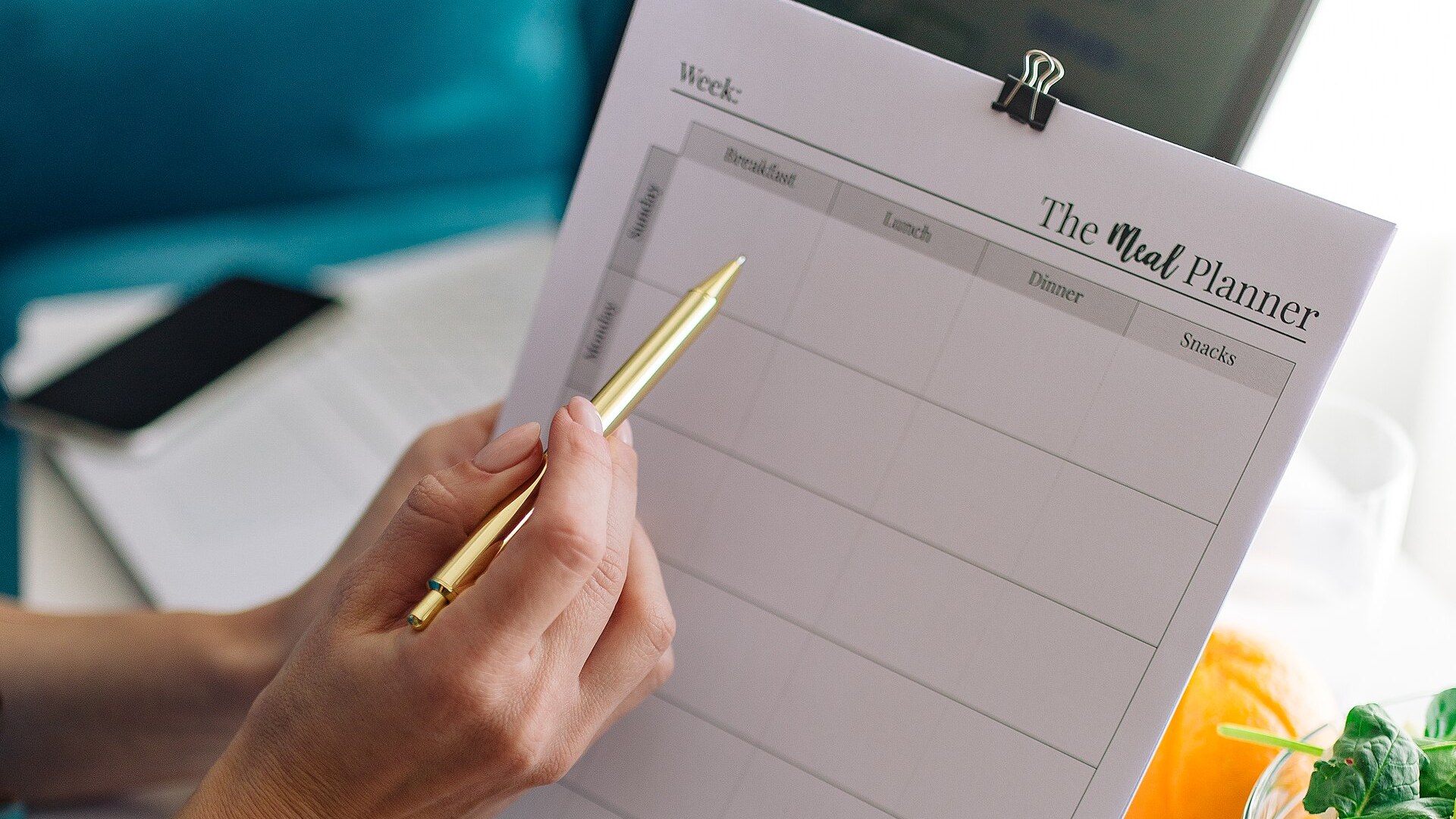
Plan a whole week of meals in one go — breakfast, lunch, dinner and snacks for all seven days — then print the plan with its shopping list and shop once. A4 or Letter, free, no sign-up, nothing uploaded.
🔒 Your data never leaves this page
- The file is processed 100% in your browser — nothing is uploaded to any server.
- No account, no email capture, no tracking of your documents.
- Your files stay on your device by design. Why that matters →
Researched by PDFBuddyFree Team · Last updated November 16, 2026 · Data: USDA MyPlate, NHS Eatwell Guide
Your week
Meals for the week
Shopping list (one item per line)
Use it in 4 steps
- Pick the Monday your week starts — the sheet is dated for all seven days.
- Type the meals — breakfast, lunch, dinner and a snack for each day. The boxes start filled with a sample week; replace any meal with your own.
- Write the shopping list — one item per line. It prints on the same page as the plan.
- Press Generate and print — stick the plan on the fridge and shop from the list.
Why planning the week saves money and time
Meal planning is the least glamorous money-saving habit and one of the most effective. The logic is simple: decide seven dinners once, on Sunday, and the week stops being seven separate decisions made hungry at 6 pm. Hungry decisions are expensive decisions — the takeaway ordered because the fridge is empty, the extra trip to the shop for the one missing ingredient, the food that goes off because nobody planned to cook it. A written plan plus a written list turns one weekly shop into the only shop, and the food you buy is the food you eat.
The plan also makes the week healthier without any willpower. A plate built around the USDA MyPlate and NHS Eatwell guidance — half vegetables and fruit, a quarter protein, a quarter wholegrains — is easy to plan on paper and hard to improvise at the end of a long day. When Monday’s dinner is already written down (“salmon and rice”), Monday’s dinner happens. When it is not written down, Monday’s dinner is whatever is nearest. That is the whole trick: the plan does the deciding in advance, when you are calm, so the tired version of you only has to follow it.
| Day | Breakfast | Lunch | Dinner |
|---|---|---|---|
| Monday | Oats with berries | Tomato lentil soup | Roast chicken & potatoes |
| Tuesday | Yoghurt & granola | Chicken wrap | Pasta arrabbiata |
| Wednesday | Scrambled eggs on toast | Leftover pasta | Salmon & rice |
| Thursday | Smoothie bowl | Chickpea salad | Beef stir-fry |
| Friday | Pancakes | Tuna sandwich | Homemade pizza |
| Saturday | Eggs & beans on toast | Soup & bread | Grilled fish & vegetables |
| Sunday | Croissants & jam | Roast dinner | Veggie curry & rice |
Three habits make the plan stick. First, cook double on two nights and eat the leftovers for lunch — Tuesday’s wrap uses Monday’s chicken, Wednesday’s lunch is Tuesday’s pasta — which is why the sample week above repeats food on purpose. Second, keep a “use it up” meal every week: a stir-fry, a soup or a curry that takes whatever is left in the fridge. Third, shop from the list and nothing else — the list is the plan in shopping form, and every item not on it is a decision made in the shop, which is exactly what the plan was meant to prevent.
Worked example — one week, one shop, €78
A couple in Rotterdam plans the week of 16 November with this tool. They type their meals — the sample week above, with Friday’s pizza swapped for a lentil stew — and a shopping list of 25 items. One shop on Monday costs €78. During the week they cook every dinner from the plan, eat Tuesday’s chicken and Wednesday’s pasta as lunches, and throw away almost nothing: a handful of herbs and half a lemon. The previous week, without a plan, they spent €112 across four shops and two takeaways, and threw away a bag of salad and a tub of yoghurt. Same two people, same appetites — the difference was one sheet of paper, written on Sunday, stuck to the fridge.
📸 The PDFBuddyFree verdict
- A real planner, not a static template — type your own meals for all seven days instead of printing someone else’s week.
- The shopping list prints on the same page as the plan, so the plan and the shop stay together — most free templates make you write the list separately.
- Built for real weeks: leftovers are planned in as lunches, and the worked example uses honest prices instead of pretending food is free.
Straight talk: limits
🥗 The planner can’t check nutrition for you
The sheet records what you plan to eat; it does not count calories, protein or vitamins. Use the MyPlate rule of thumb — half the plate vegetables and fruit, a quarter protein, a quarter wholegrains — and check with a dietitian if you need a medical diet.
📄 One page fits short meal names
Each cell holds about three short lines. “Pasta arrabbiata” fits; a full recipe with ingredients does not. Keep meal names short on the sheet and keep recipes in a cookbook or an app.
🛒 The shopping list is your list — check quantities
The list prints exactly what you type, one item per line. Quantities are up to you: “chicken breasts” for two people is not the same shop as “chicken breasts” for six. Read the list once before you leave, with the plan beside it.
Meal Planner FAQ
How do I start meal planning?
Pick one week and plan only the dinners first — breakfast and lunch can stay simple and repeated. Type seven dinners into this tool, write the shopping list from those dinners, shop once, and cook what the sheet says. When dinners feel easy, add lunches the next week.
What meals should I put in?
Meals you already know how to cook, in a rough balance: half the plate vegetables and fruit, a quarter protein, a quarter wholegrains (USDA MyPlate / NHS Eatwell Guide). Plan two “cook double” nights — the leftovers become the next day’s lunch — and one “use it up” meal, like a stir-fry or soup, for whatever is left in the fridge.
How does the shopping list work?
Type one item per line in the shopping-list box — the sample list is already filled in, so edit it to match your meals. The list prints on the same page as the plan, with a tick box beside each item, so you can tick items off in the shop.
Can I plan for a family?
Yes — the sheet holds seven days and four meals a day whatever the household size; only the shopping quantities change. For a family of four, write quantities into the list (“chicken breasts × 8”) so one shop covers everyone.
A4 or Letter — which paper size?
A4 for Europe, the UK and most of the world; Letter for the United States and Canada. The layout is identical — only the page size changes — so pick the size your printer is loaded with.
Can I reuse last week’s plan?
Yes — the form keeps your meals typed in, so next week’s plan takes a minute: change the week-start date, swap two or three meals, adjust the list, and generate again. Families often rotate two or three favourite weeks and never plan from scratch.
Is this meal planner free?
Yes — unlimited weekly plans, every layout, forever. No trial, no watermark, no account, no payment details. The PDF is assembled in your browser, so there is nothing to meter.
Sources & trust
Balanced-plate guidance follows USDA MyPlate and the NHS Eatwell Guide (half the plate vegetables and fruit, a quarter protein, a quarter wholegrains). The Rotterdam worked example uses illustrative prices for November 2026. Researched by PDFBuddyFree Team · Last updated November 16, 2026.
You may also need
Card photos: Digital illustration · Philippe Alès, Wikimedia Commons, CC BY-SA 4.0