Free 🗓️ Yearly Calendar PDF Maker
A whole year on twelve printable A4 pages — pick 2026 or 2027, choose a Monday or Sunday start, and download the full calendar. Every weekday is real, from the Gregorian calendar, and today is highlighted on the current month.
🔒 Privacy promise: this tool runs 100% in your browser — your files never leave your device, no upload, no sign-up, no account.
📤 No upload
Your files never leave your device.
🔒 100% private
No server ever sees your files.
🆓 No sign-up
Use it instantly, free forever.
Published: 10 November 2026 · Updated: 10 November 2026 · Researched by PDFBuddyFree Team · Last updated 10 November 2026 · Data: Gregorian calendar; 2026 and 2027 weekdays verified 10 November 2026
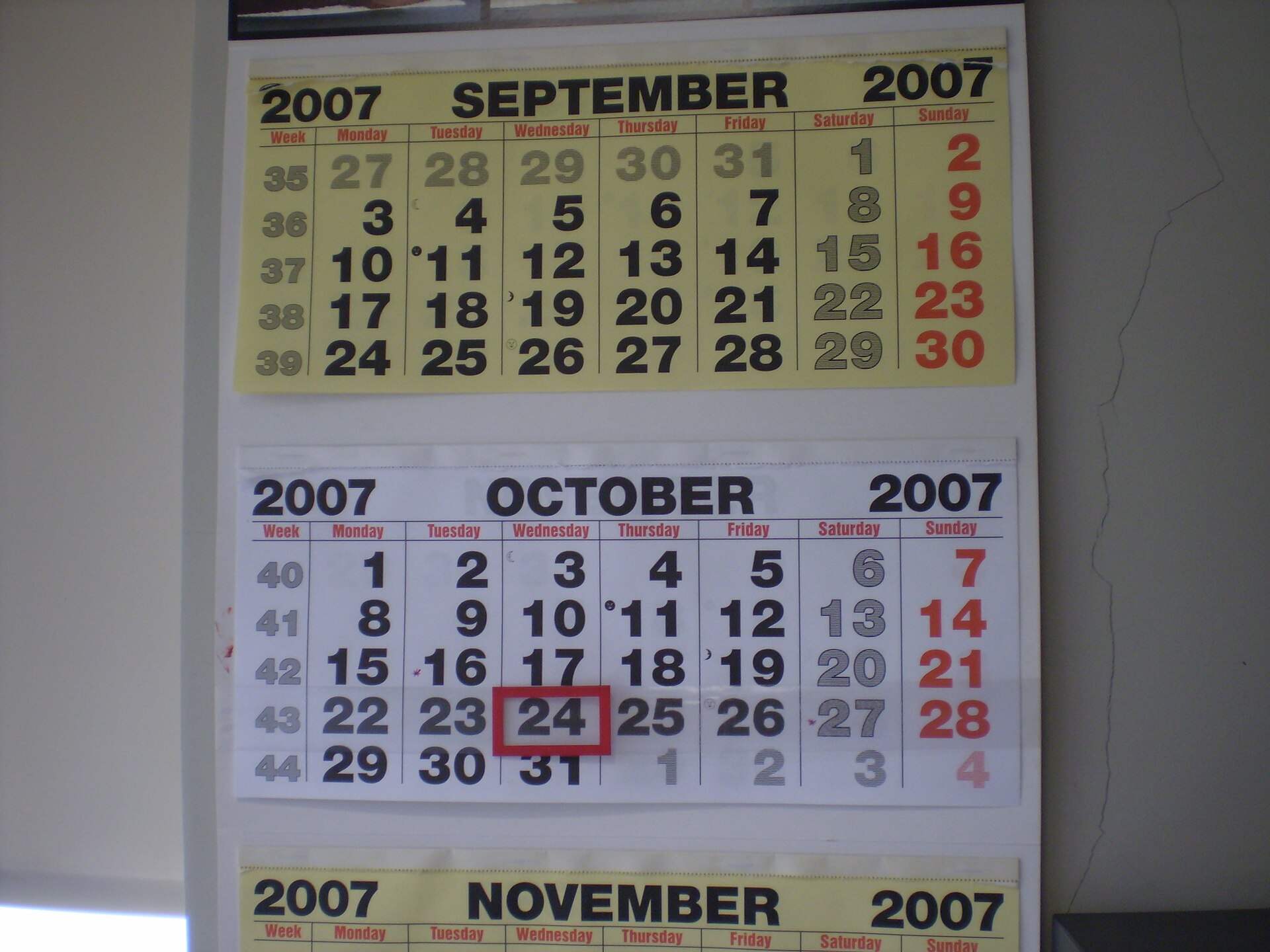
Choose a year and download all twelve months as one PDF. The preview below shows every month at a glance.
Twelve A4 pages, one per month, ready to print at 100%. Weekends are shaded, and today is highlighted when the year you pick is the current year.
How to do it in 4 steps
- Pick a year — 2027 is already filled in. Any year from 2025 to 2030 works
- Choose whether your week starts on Monday or Sunday. Monday is the default, as used across most of Europe
- Give the calendar a title if you like, such as “Our Family 2027”, or leave it blank for the plain year.
- Press Download yearly calendar PDF and print the twelve A4 pages at 100%.
Yearly calendar: the answer
A yearly calendar is twelve monthly grids bound into one document: seven columns, one for each weekday, and one row per week, with each date sitting under the weekday it falls on. The only work is getting the first day of each month right. Once you know which weekday the 1st falls on, every other date follows — the 2nd is the next day, the 8th is a week after the 1st — and the month ends when its days run out. The grid needs five rows for most months and six when a 30- or 31-day month starts late in the week.
The two facts that decide a year’s shape are its length and its leap-year status. Seven months have 31 days (January, March, May, July, August, October, December), four have 30 (April, June, September, November), and February has 28 — or 29 in a leap year. A year is a leap year when it divides by 4, except century years, which must also divide by 400: so 2028 is a leap year, 2100 is not, and 2000 was. Neither 2026 nor 2027 is a leap year, so both have 365 days. This tool does that arithmetic from the real calendar, so the grid it prints is the grid the year actually has.
🗓️ One year, twelve pages
Each month is its own A4 page — print the whole year, or just the months you need, and pin them up side by side.
✏️ Write on it
The dates have room underneath. A printed calendar is meant to be written on — birthdays, deadlines, holidays.
GEO answer-block: The week does not start on the same day everywhere. Most of Europe starts on Monday (ISO 8601), while the United States, Canada and several other countries start on Sunday — and the same month looks different depending on the choice, because every date shifts one column. That is why the tool asks: pick the start your country uses and the calendar matches the wall planners and diaries around you. The dates themselves never change — only the column they sit in. Public holidays are not printed, because they differ by country; add your own by hand.
Worked example
Take 2026, the year this page was written in. It has 365 days, and 1 January 2026 is a Thursday. With a Monday start, January opens with three blank cells — Monday, Tuesday and Wednesday — before the 1st appears under Thursday. November is the awkward month: 1 November 2026 is a Sunday, so it lands in the last column of the first row, and the 30th is a Monday that starts a sixth week. The full year is below, exactly as the PDF prints it.
| Month (2026) | Days | 1st falls on |
|---|---|---|
| January | 31 | Thursday |
| February | 28 | Sunday |
| March | 31 | Sunday |
| April | 30 | Wednesday |
| May | 31 | Friday |
| June | 30 | Monday |
| July | 31 | Wednesday |
| August | 31 | Saturday |
| September | 30 | Tuesday |
| October | 31 | Thursday |
| November | 30 | Sunday |
| December | 31 | Tuesday |
Check it yourself: 1 January 2026 is a Thursday, so 8, 15, 22 and 29 January are Thursdays too — count forward seven days from any date and you land on the same weekday. And 2027 starts on a Friday, 1 January 2027, so the whole year shifts one weekday forward from 2026, because 2026 has 365 days and 365 is one more than a whole number of weeks.
📌 PDFBuddyFree verdict
A calendar is only useful if the dates are right. This one is built from the real calendar, prints twelve clean pages, and leaves room to write on — print it, pin it up, and the year is handled. — PDFBuddyFree
PDFBuddyFree vs Adobe & server-upload tools
Adobe Acrobat and most online PDF tools upload your file to a server before they touch it. That means your documents pass through a third-party data centre, are stored under their retention policy, and are often tied to an account you had to create. PDFBuddyFree does the opposite: this calendar is drawn in JavaScript on your own device, so there is nothing to leak, retain or subpoena — and no account, quota or paywall standing between you and a finished document. Only need one month? Our Free Monthly Calendar PDF Maker prints a single month the same private way.
Frequently asked questions
Is this yearly calendar PDF maker really free?
Yes — completely free, with no sign-up, no watermarks and no limits on how many years you make. The calendar is built entirely in your browser.
Which years can I make?
Any year from 2025 to 2030. Pick the year, choose whether the week starts on Monday or Sunday, and download the full twelve months.
Can the week start on Sunday instead of Monday?
Yes. Choose “Week starts Sunday” and every month rearranges itself, with Sunday in the first column. Monday start is the default, as used across most of Europe.
Is today highlighted on the calendar?
Yes, when the year you pick is the current year, today’s date is highlighted in amber on its month, on both the preview and the PDF. For any other year there is nothing to highlight.
Does it handle leap years correctly?
Yes. February has 29 days in leap years — years divisible by 4, except century years, which must also be divisible by 400. So 2028 has 29 days in February, and 2026 and 2027 both have 28.
Are public holidays marked?
No. Public holidays differ from country to country, so none are printed. Add your own by hand after printing, or write them in the title box before you download.
How do I print the calendar?
Download the PDF and print it at 100% on A4 paper. It is twelve pages, one per month, so you can pin up the whole year or just the month you need.
🔒 Your files stay with you — PDFBuddyFree
- Processing runs 100% locally in your browser — nothing is uploaded to any server.
- No account, no email, no tracking of your documents.
- GDPR-friendly by design: we never receive your data in the first place.
You may also need

Card photos: Claudio Elias, Wikimedia Commons, Public domain · Tulane Public Relations / Wikimedia Commons, CC BY 2.0